

Labour Prime Minister Andy Burnham has just sparked a national debate by saying he is “open” to making a formal apology for Britain’s role in the transatlantic slave trade.
“Listening to calls for a formal apology on behalf of the British state”, he wrote in The Guardian newspaper at the weekend, will form an important part of the process of having a dialogue with nations affected by the transatlantic slave trade.
“I am open to them”, said Burnham, signalling his support for a formal apology.
Then, last night, the Telegraph newspaper reported that Burnham is open to going even further by considering reparations in another name — making investments in the healthcare and education of African and Caribbean nations.
But I strongly disagree. Britain should neither be apologising nor paying financial reparations for its role in the slave trade. Here’s why.
Nobody denies that slavery was horrific. Human beings were bought, sold, separated from their families and worked to death. It was utterly appalling.
But the calls for a formal apology, which will inevitably open the door to enormous financial “reparations” being paid to those same nations, must be strongly opposed.
For a start, they are historically illiterate.
Though you won’t hear about it today from left-wing activists who want to project their own sense of virtue and moral righteousness, Britain has already apologised.
Nearly 200 years ago, in 1840, Prince Albert apologised for slavery at a meeting of the Society for the Extinction of the Slave Trade, in London.
“This great country”, he said, “will not relax in its efforts until it has finally, and for ever, put an end to a state of things so repugnant to the spirit of Christianity, and the best feelings of our nature”.
Then, nearly twenty years ago, in 2007, Labour Prime Minister Tony Blair repeated the exercise, expressing sorrow for Britain’s involvement in the slave-trade. How many acts of contrition, exactly, does one nation need to make?
Yet more fundamentally, we are also being given a deeply flawed, historically inaccurate, and politically biased version of events.
While I suspect that we will not hear about it on the BBC, in school classrooms, or university seminars, Britain led the world in efforts to abolish the slave-trade.
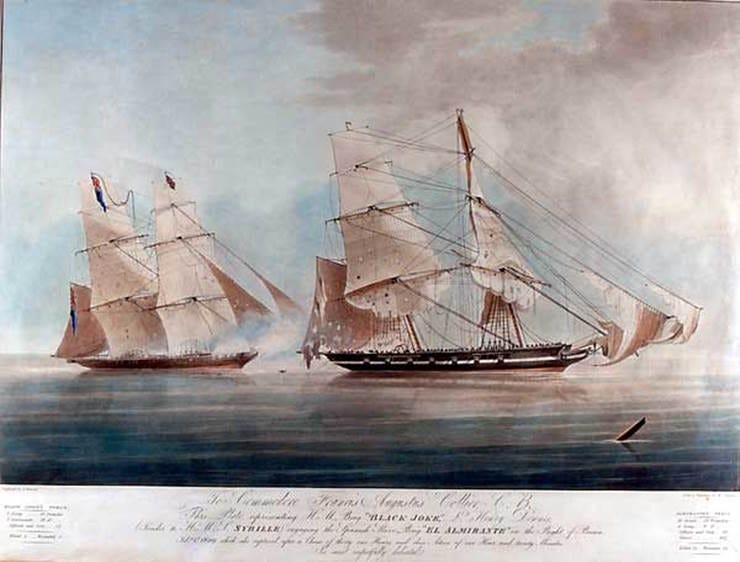
We formally abolished the practice in 1807, legislated to abolish slavery across much of the British Empire in the 1830s, and deployed considerable naval power to ensure that the slave-trade was brought to an end.
As I said in a video on our Facebook page yesterday, everybody in Britain who is interested in this debate should research the ‘West Africa Squadron’'.
Why? Because this was a unit of the British Royal Navy that was officially tasked with suppressing the slave trade by patrolling the West African coastline.
Many British sailors died in the process of fighting the slave trade. They played a key role in helping to bring the barbaric practice to an end.
They captured roughly 1,600 slave ships, liberated 150,000 slaves, and cost around 2 per cent of Britain’s GDP at the time — equivalent to the entire defence budget today.
Strangely, in the fashionable version of British history that’s written by radical left-wing activists, we never seem to hear about these men or this moment in history.
Instead, much of the political, media, BBC, and university class has become fully invested in spreading what we might call the ‘decoloniser’ version of British history — a hideously biased and profoundly negative narrative about our past.
As Professor Nigel Biggar, author of the excellent book Reparations, points out:
“ … by identifying British colonial history with slavery and the dehumanising racism towards African people that justified it, the ‘decolonisers’ completely overlook everything that happened after 1807, when the British Empire spent the second half of its existence using its dominant imperial power to suppress slave-trading and slavery all over the world.
In the 1820s and the 1830s, the Slave Trade Department was the largest unit in the British Foreign Office. And at the height of its endeavours in the mid-1800s to interrupt the Atlantic slave trade, the Royal Navy devoted 13 per cent of its total manpower to patrolling the coast of West Africa.
Yet, none of this appears in the ‘decolonisers’’ narrative, because, since it disturbs the simple equation ‘colonialism and slavery’, it is politically inconvenient. So, they simply ignore it. That is dishonest, it abuses the past, and it creates a fraudulent narrative.”
What is also ignored, as I pointed out earlier this year when the debate over slavery started to get going, is the remarkable contributions that Britain has made to many of these nations along the way.
The English language. The common law legal tradition. Universities and higher education. Effective administration and superior governance. Higher rates of growth. Medicine and science. Longer life expectancy. Policing and criminal justice. And sanitation, to name only a few.
Perhaps if we’re going to meet demands from radical activists on university campuses that we ‘decolonise’ these nations then we should decolonise everything?
Historian and broadcaster Rafe Heydel-Mankoo has raised another objection to this deeply flawed version of our history: the selective allocation of guilt.
Again, you won’t hear about this from the Labour Party, The Guardian, left-wing academics in our taxpayer-funded universities, or Commonwealth conferences at which leaders are demanding billions or trillions in reparations.
But slavery was practiced across continents and is still being practiced widely today.
African rulers and merchants enthusiastically participated in capturing and selling people, as did Arab slave traders who operated over a much longer period of time than the transatlantic trade and were arguably even more brutal.
I ask: when will we get the David Olusoga BBC documentary about the Kingdom of Dahomey in Benin, the Asante Empire in Ghana, or the Yoruba Kingdom of Oyo on the Guinea Coast — all of which were incredibly enthusiastic slave exporters?
When will we get the school lessons and university seminars about how slavery was practiced widely across the early and medieval Islamic Middle East?
Or open letters from left-wing celebrities demanding that slavery reparations are paid by countries across Africa, Asia, and the Middle East, where 50 million people are still being enslaved today — including countless children and women who are pushed into forced marriages in Islamic nations?
Where is the comparable pressure on African and Arab states to apologise for their historic role in the slave trade, or provide financial reparations? Or equivalent demands for cash payments from the successors of African slave-trading kingdoms?
The answer is that these pressures do not exist.
Because what lies at the root of the current push for an apology and financial reparations is an anti-British, anti-Western ideology that’s fully focused on using slavery to dismantle or ‘deconstruct’ the West.
It is asymmetrical or two-tier: non-Western nations are allowed to ignore their sins while Western nations are heavily punished and forced to pay for theirs.
Within this deeply warped worldview that is now rife in our schools, universities and media class, Britain’s historic ‘crimes’ and mistakes become its permanent identity, while its capacity for moral reform count for nothing at all.
Britain is constantly guilty while other societies are only ever presented as victims, with their own histories of conquest and enslavement downplayed or ignored.
This very selective and biased approach to morality makes reconciliation even harder.
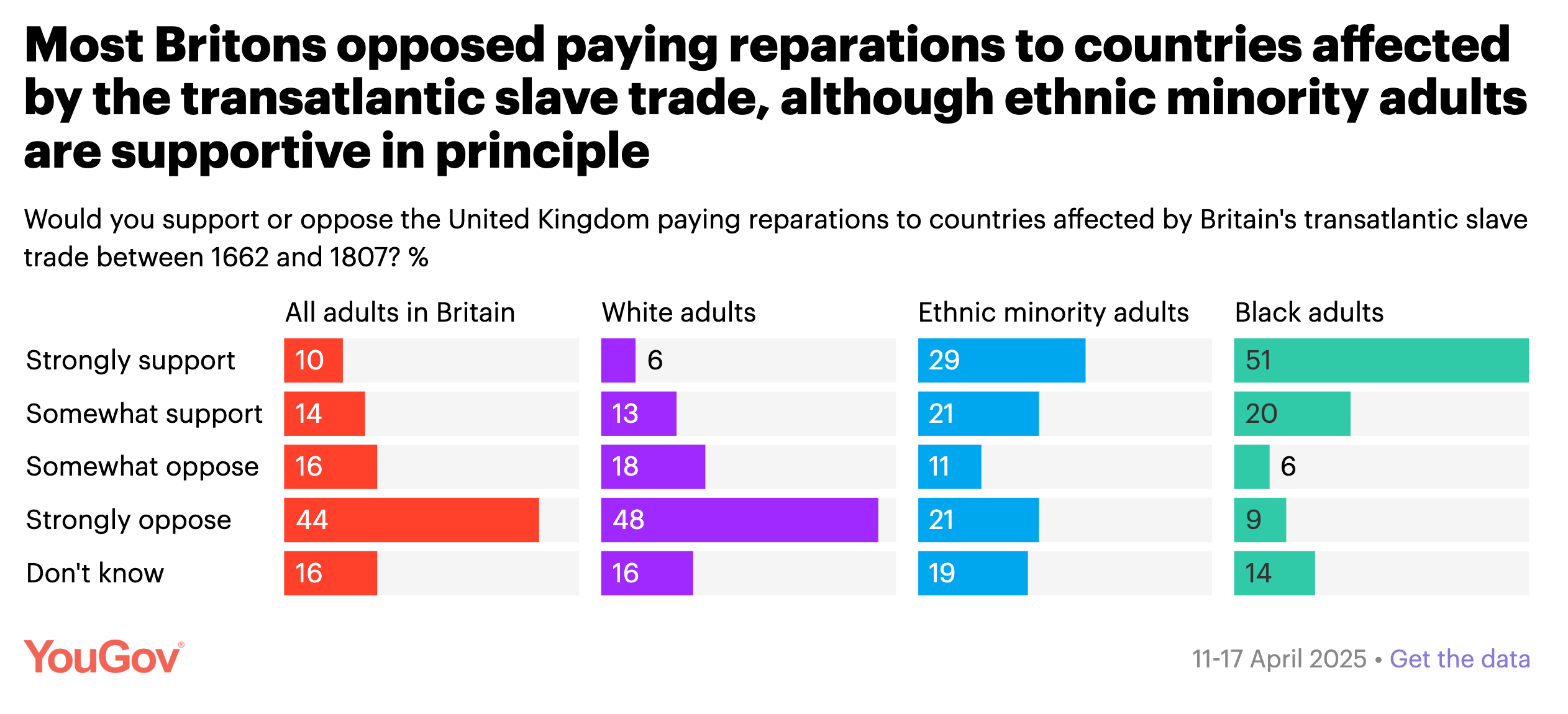
If Britain’s guilt is permanent then no apology or payment can ever settle the account. The demand for ‘justice’, the exploitation of the British people (roughly two-thirds of whom oppose reparations), and the resentment this will cause, never ends. The anger, the bitterness, the division is merely transferred from one group to another.
Westerners are asset-stripped in the name of ‘justice’ for something they themselves are not responsible for and are expected to take all this with a smile on their face.
What also makes these demands especially objectionable is that they are championed by the very British politicians and celebrities who have benefitted enormously from Britain’s generosity, such as Sir Lenny Henry and Labour MP Dawn Butler.
Or somebody such as Labour MP Bell Riberio-Addy, who was raised on a taxpayer-subsidised council estate, received taxpayer-subsidised scholarships for her education, and then returns this generosity by demanding that the British people pay millions or billions in “reparations”.
Such people should have to publicly explain why today’s taxpayers — British families who are struggling to pay their bills during the worst cost-of-living crisis on record — should be forced to pay money to often financially secure celebrities, politicians and citizens that are often doing better than the white working-class for ‘crimes’ that were committed centuries before they were born.
So too should the corrupt states that are demanding reparations.
Many of the same arguments are being made by notoriously corrupt states that have failed to find their own route to economic prosperity and growth — even when they have already been given massive reductions in their national debt.
Many countries in the African Union have already received more than $100 billion in major debt relief under the Heavily Indebted Poor Countries initiative. And many of the same nations also happen to score dismally on Transparency International’s corruption index, suffering from widespread fraud and political corruption.
Yet despite all of that, they still demand reparations from the West. This is …